
The Charity Ideal and Refugee Witness
The Glass RoomThis flow follows the shift from discussing distant suffering to hearing refugees speak within the Landauer home.
increasing Bearing strength in each event
 decreasing
Bearing strength in each eventdecreasingAn Appeal for Action

From News to Responsibility
Viktor’s proposal
Viktor suggests using the house and the family’s influence to support refugees. He believes individuals must push governments toward action, even when policy seems beyond personal control.
Liesel worries about public access but accepts that the crisis demands a response.
The problem of distance
The couple’s comfortable home sits close to a refugee crisis without automatically becoming part of it. Their debate asks whether sympathy can become practical help.
A Stage for Testimony
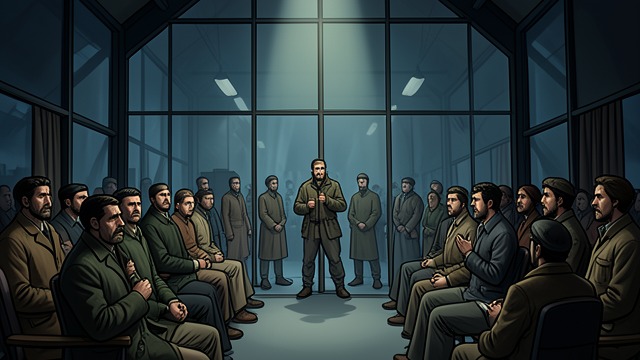
Refugees Enter the Room
Arranged testimony
The committee brings refugees into the Glass Room to describe their experiences. The organizers hope that direct testimony will move attendees beyond newspaper accounts.
The carefully staged entrance makes the room resemble a small theatre.
Ethical tension
The witnesses are asked to make their suffering visible to an audience. The event seeks solidarity, yet risks treating people as examples rather than neighbors.
Kata’s Account

Violence Described Plainly
A worksite attacked
Kata recounts an invasion of her workplace, where women are beaten and equipment destroyed. She describes taking Marika from school and fleeing through streets marked by violence.
Her direct language unsettles listeners more than the abstract facts they have read in the press.
The force of a witness
Kata’s account gives the crisis a personal voice and exposes how quickly ordinary life can become dangerous. Her testimony leads directly to Liesel’s offer of shelter.
Shelter Beyond the Speech

Help Moves Into the Garden
The chata offered
Liesel proposes that Kata and Marika use the family’s summerhouse. The practical offer responds to a need that a committee discussion alone cannot meet.
Kata is wary of special treatment but accepts the possibility of safety.
Personal motives overlap
Viktor’s attachment to Kata makes the charitable arrangement emotionally charged. The family’s action may help the refugees while also complicating the household’s private history.
The Border Repeats the Crisis
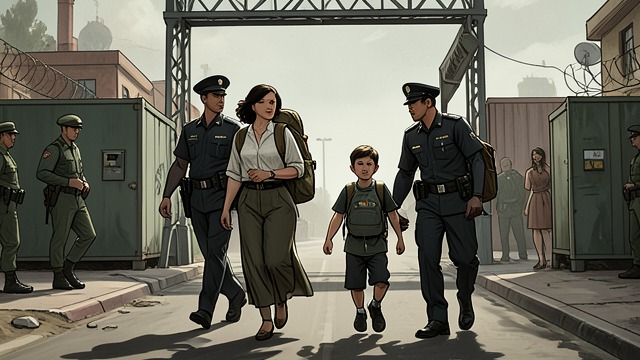
Witness Becomes Victim Again
Separation by authority
After living as part of the household, Katalin and Marika are detained at Bayonne. Their refugee status again makes them vulnerable to officials who control movement through documents.
The family that offered shelter cannot prevent their separation.
Limits of generosity
The episode exposes the inadequacy of private charity against state power. Individual acts of care matter, but they cannot guarantee refuge or keep families together.
After refugees arrive from Austria
At a Coordinating Committee meeting
During the committee testimony
Immediately after the meeting
At Bayonne during the family’s escape
